


Author Dr Kate Garside
STI test kits and how to use them at home
Sexually transmitted infections are far more common than most people realise, and the majority cause no symptoms at all in the early stages. That is precisely why testing matters. You cannot tell by looking, and neither can a partner.
Home testing has made sexual health screening far easier to access, and for many people it removes the single biggest barrier of all, which is having to walk into a clinic. This guide explains what home STI testing actually involves, how the different kit types work, how to take a good sample, and the timing rules that decide whether your result can be trusted.
Why home STI testing matters
Around seven in ten women and half of men with chlamydia have no symptoms whatsoever. Gonorrhoea, syphilis and HIV can all sit quietly for months or years while still being passed on and still causing damage.

Left untreated, these infections can lead to pelvic inflammatory disease, ectopic pregnancy, tubal infertility, chronic pelvic pain, epididymo-orchitis in men, and in the case of syphilis and HIV, serious long term damage to the heart, brain and immune system.
The good news is that almost every common bacterial STI is curable with a short course of antibiotics, and HIV is now a manageable long term condition when treated early. Early detection changes the outcome enormously.
Who should consider testing
You do not need symptoms to justify a test. Consider screening if any of the following apply:
- You have had a new sexual partner
- You have had unprotected sex, or a condom split or slipped
- You are starting or ending a relationship and want a clean baseline
- A current or previous partner has told you they have an infection
- You are under 25 and sexually active, in which case annual chlamydia screening is recommended
- You are planning a pregnancy or currently pregnant
- You have symptoms such as discharge, pain on passing urine, sores, unusual bleeding or genital itching
If you are under 16, please speak to a sexual health service, your GP or a school nurse rather than testing alone. They can offer confidential support and make sure you are safe.

Which STIs can be tested for outside a clinic
Not all infections are tested the same way, and this is the part people most often get wrong. Some need a swab or urine sample analysed by a laboratory. Others are blood tests looking for antibodies.
| Infection | Sample needed | Test method |
|---|---|---|
| Chlamydia | Urine (men), vaginal or rectal swab (women) | Laboratory NAAT, posted to a lab |
| Gonorrhoea | Urine, vaginal, throat or rectal swab | Laboratory NAAT, posted to a lab |
| HIV | Finger prick blood or oral fluid | Rapid antibody test or laboratory test |
| Syphilis | Finger prick blood | Rapid antibody test or laboratory test |
| Hepatitis B | Blood | Surface antigen test |
| Hepatitis C | Blood | Antibody test |
| Trichomonas | Vaginal swab or urine | Laboratory test |
| Herpes and genital warts | Swab of the lesion, or visual examination | Clinic assessment, not suitable for home kits |
Herpes and warts are worth singling out. Both are usually diagnosed by a clinician looking at the affected area, and swabs are only useful while a blister or ulcer is actually present. A home kit will not give you a reliable answer for either.
STI and blood borne infection test kits from Valuemed
Our sexual health range covers the blood borne infections: HIV, syphilis, hepatitis B and hepatitis C. All four are CE marked rapid cassette tests giving a result in around ten minutes from a small blood sample.
Please note: these are professional end use diagnostic kits intended for clinics, GP practices, pharmacies, occupational health teams and outreach services. They are not licensed for individual self testing at home. If you are testing yourself, free comprehensive screening is available through NHS sexual health services and the SH.UK postal service.
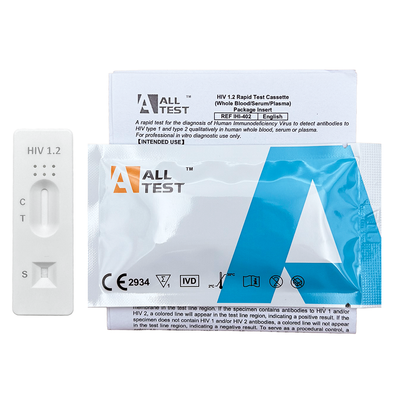
Detects HIV-1 and HIV-2 antibodies in whole blood, serum or plasma. Result in 10 minutes.
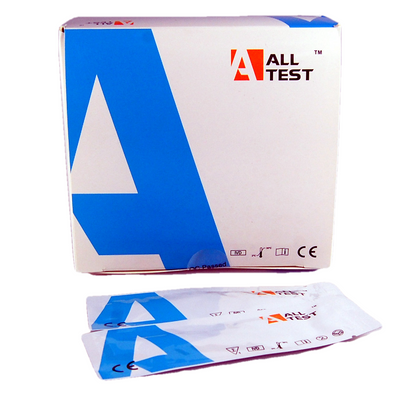
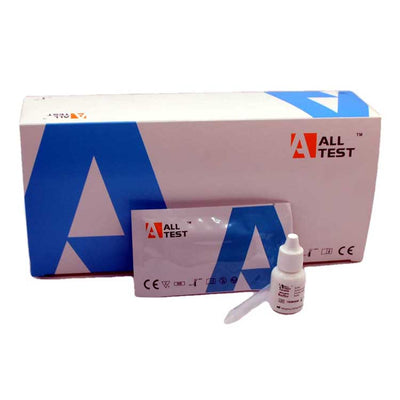
Bulk and NHS pricing available. Request a wholesale quote or speak to our trade team.
The two types of kit and how they differ
Rapid lateral flow tests
These work in the same way as a pregnancy test or a COVID test. A sample is applied to a cassette, buffer solution is added, and lines appear within about ten to fifteen minutes. The result is available immediately, with no lab involved.

They are used for blood borne infections such as HIV, syphilis, hepatitis B and hepatitis C. Our range of infectious disease rapid test kits includes CE marked cassettes with excellent published sensitivity and specificity.
One important caveat. The rapid HIV 1.2 cassettes, syphilis test kits and hepatitis kits we supply are professional end use devices. They are intended for clinics, GP practices, occupational health providers, charities and outreach services, not for individual self testing at home. If you are a healthcare professional, these are exactly what you need. If you are testing yourself, use a kit that is CE marked for self testing or go through NHS services.

Postal laboratory kits
You collect a urine sample or a swab at home, seal it, and post it to a laboratory in a prepaid envelope. Results usually come back within two to five working days.
This is the correct method for chlamydia and gonorrhoea, because these infections are detected using nucleic acid amplification testing which cannot be replicated on a lateral flow strip. Any product claiming to give an instant chlamydia answer from a cassette should be treated with real caution.
Window periods, the part everyone skips
Testing too soon is the single most common reason for a falsely reassuring result. Every infection has a window period, meaning the gap between exposure and the point at which a test can reliably detect it.
| Infection | Test reliably from |
|---|---|
| Chlamydia | 2 weeks after exposure |
| Gonorrhoea | 2 weeks after exposure |
| Trichomonas | 2 weeks after exposure |
| HIV, laboratory antigen and antibody test | 45 days after exposure |
| HIV, rapid antibody test | 90 days after exposure |
| Syphilis | 12 weeks after exposure |
| Hepatitis B | 6 to 12 weeks after exposure |
| Hepatitis C | 12 weeks after exposure |
Always check the specific window period printed in your kit instructions, as it varies between devices. If you test early and the result is negative, you will usually need to repeat it once the full window has passed.
Urgent: if you think you may have been exposed to HIV within the last 72 hours, do not wait and do not test. Go to a sexual health clinic or A&E immediately and ask about PEP, a course of medication that can prevent HIV taking hold. The sooner it is started, the better it works.
How to use a home STI test kit step by step
1. Read the instructions first, all of them
Every kit differs slightly in buffer volume, drop count and reading time. Read the whole leaflet before you open anything. Check the expiry date on the foil pouch and make sure the desiccant sachet inside is intact and dry.
Bring the kit up to room temperature before use. A cassette taken straight from a cold porch or a car boot can produce an invalid result.
2. Set up a clean space
Wash and dry your hands thoroughly. Lay out everything you need on a clean, flat, dry surface. A bathroom shelf or kitchen worktop wiped down beforehand works well. Have a timer ready, as reading a result at the wrong minute is a genuine source of error.
If you are testing others in a professional setting, use disposable gloves and follow your local infection control policy.
3. Collect your sample correctly
This is where accuracy is won or lost. Follow the section below that matches your kit.
Urine samples
- Do not pass urine for at least one hour, ideally two, before collecting
- Use a first catch sample, meaning the first 20 to 30ml as you start to pass urine, not a mid stream sample
- This is the opposite of what you do for a urine infection test, and it catches organisms flushed from the urethra
- A clean urine specimen cup makes transfer into the sample tube far easier
Vaginal swabs
- Do not use lubricant, vaginal creams or pessaries in the 24 hours beforehand
- Hold the swab by the end of the shaft, not near the tip, and do not let the tip touch anything
- Insert roughly 5cm, about half a finger's length, into the vagina
- Rotate gently against the vaginal walls for 10 to 15 seconds
- Withdraw and place straight into the tube, then seal firmly
It should not hurt. If it does, stop and see a clinician instead, as pain on swabbing can itself be a sign that you need examining.
Finger prick blood samples
- Warm your hands first under running warm water and shake them below waist level to encourage blood flow
- Use the side of the fingertip on your third or fourth finger, not the pad, as it is less sensitive
- Clean with an alcohol wipe and let it dry completely, because residual alcohol dilutes the sample
- Lance firmly in one movement, then wipe away the very first drop
- Let the next drops fall into the pipette or collection tube without squeezing hard, as excessive milking releases tissue fluid and skews the result
If you struggle to get enough blood, our step by step guide on how to obtain a finger prick blood sample is worth five minutes of your time. Good quality safety lancets make a noticeable difference to comfort and sample volume.
4. Run the test or post the sample
For a rapid cassette, add the exact number of buffer drops stated, hold the dropper vertically, and start your timer immediately.
For a postal kit, label the tube with your details before sealing it in the bag, seal the prepaid envelope, and post it the same day if possible. Samples sitting in a bag over a bank holiday weekend can be rejected by the laboratory.
5. Read at the right time
Read rapid tests within the stated window, usually 10 to 15 minutes. Do not read a cassette after 20 minutes, because faint evaporation lines can appear later and are meaningless.
How to interpret your result
| What you see | What it means |
|---|---|
| Control line only | Negative, no antibodies or antigen detected |
| Control line plus test line | Reactive, even if the test line is very faint |
| Test line only, or no lines at all | Invalid, the test has failed and must be repeated with a fresh kit |
A faint line still counts. Rapid tests are qualitative, so line intensity tells you nothing about how much infection is present. Treat any visible test line as a reactive result.

It is also worth being clear about the language. Rapid tests are screening tests, not diagnoses. A reactive result means further testing is required, not that the diagnosis is confirmed.
What to do next
If your result is reactive or positive
First, do not panic. Every one of these infections is either curable or highly treatable, and a positive result is the start of getting it sorted rather than a disaster.
- Contact a sexual health clinic or your GP for confirmatory laboratory testing. Antibiotics and antivirals require a prescription and the correct regimen matters
- Avoid sex until you have been treated and told it is safe to resume, which is usually seven days after treatment is completed
- Tell recent partners so they can be tested. Clinics can do this anonymously on your behalf if you would rather not have the conversation yourself
- Attend for a test of cure if you are advised to, particularly with gonorrhoea given rising antibiotic resistance
If your result is negative but you still have symptoms
A negative result never overrides symptoms. Book a clinic appointment. Discharge, pain, sores or unusual bleeding all need examining properly, and there are several non sexually transmitted causes worth ruling out.
Thrush and bacterial vaginosis are frequently mistaken for an STI, and a candida albicans thrush test can help clarify things. Similarly, burning on passing urine is very often a urinary tract infection rather than an infection passed on sexually, which our cystitis and UTI test strips will pick up in about a minute.
If there is any chance of pregnancy alongside your symptoms, a pregnancy test should be part of the picture, because it changes which treatments are safe to use.
Common mistakes that ruin a result
- Testing too early. By far the most frequent problem, and the reason so many people are falsely reassured
- Using a mid stream urine sample. First catch urine is what you need for STI testing
- Touching the swab tip. Contamination from fingers or surfaces can invalidate the sample
- Adding the wrong number of buffer drops. Too few and the sample will not migrate, too many and the result is diluted
- Reading the result late. Anything after the stated window is unreliable
- Using an expired or damaged kit. Check the pouch and the date every single time
- Assuming one negative covers everything. A chlamydia test says nothing about HIV, and a blood test says nothing about gonorrhoea in the throat
That last point deserves emphasis. If you have had oral or anal sex, genital swabs and urine samples will miss throat and rectal infections entirely. Those sites need their own swabs, which generally means a clinic or a comprehensive postal kit.
Symptoms that need same day attention
Most STI symptoms are not emergencies, but a few are. Seek urgent medical help if you experience:
- Severe lower abdominal or pelvic pain, particularly with fever
- Painful swelling of one testicle
- Heavy or unexpected vaginal bleeding
- A widespread rash including the palms and soles
- Any symptoms during pregnancy
- Possible HIV exposure within the last 72 hours
Frequently asked questions
Are home STI tests accurate?
When used correctly and at the right time, yes. Modern CE marked rapid tests report sensitivity and specificity above 99% in clinical evaluation, and postal laboratory kits use the same assays a clinic would. Accuracy problems almost always come down to timing and sample quality rather than the device itself.
Can I test if I have no symptoms?
Absolutely, and you should. Most STIs are asymptomatic, so waiting for symptoms means waiting far too long.
Will my result be shared with my GP?
A test you buy and use privately is not automatically shared with anyone. If you test through NHS services, laboratories are required to notify certain infections to public health for surveillance purposes, though this is handled confidentially.
Do I need to test my partner too?
Yes. Treating one person and not the other simply means the infection bounces straight back. Partner testing and treatment is a routine part of managing any STI.
How often should I screen?
Annually if you are sexually active with new or multiple partners, and after each new partner. Some people benefit from testing every three months, and a clinician can advise on what fits your circumstances.
Can I use a professional test kit on myself?
We would not advise it. Professional kits assume a trained operator, often do not include the sampling equipment, and come without the self test validation and support that a consumer device carries. Choose a kit that is CE marked for self testing, or use NHS services.
For clinics, pharmacies and occupational health providers
If you deliver testing as a service rather than for yourself, our professional rapid diagnostic test range covers syphilis, HIV, hepatitis B, hepatitis C and a good deal more, in bulk packs with same day dispatch. Individual products include the ALLTEST Ultra syphilis kits, hepatitis B surface antigen cassettes and hepatitis C antibody cassettes.
We also run online test kit training for teams new to point of care testing, and our trade team is happy to quote for bulk and NHS orders. Just get in touch.
The bottom line
Testing is a normal, sensible piece of health maintenance, in the same category as checking your blood pressure or your cholesterol. There is nothing to be embarrassed about, and the people who test regularly are the ones looking after themselves and their partners properly.
Get the timing right, take the sample carefully, follow up any reactive result with a clinic, and remember that free comprehensive screening is available through the NHS if that suits you better. Whichever route you choose, the important thing is that you test.
Medical Disclaimer
The information in this article is for general educational purposes only and does not replace professional medical advice, diagnosis or treatment. Home and point of care test kits are screening tools. A negative result does not entirely exclude infection, particularly if testing was carried out within the window period, and any reactive result requires confirmatory laboratory testing through a sexual health service or GP.
Treatment for sexually transmitted infections requires prescription medication and clinical assessment. Never attempt to self treat, and never use another person's antibiotics.
Free confidential STI testing and treatment is available to everyone in the UK through NHS sexual health services and the SH.UK postal screening service. If you are worried about your sexual health, are pregnant, or are experiencing severe symptoms, please contact a healthcare professional.