Our range of cancer marker test kits is designed to measure key tumour markers that are used in clinical medicine to support the investigation and monitoring of serious cancers. These tests are based on markers commonly assessed in hospital and NHS diagnostic pathways, including those associated with bowel, colon, breast, prostate, and ovarian cancers.
While these markers are not used on their own to confirm a diagnosis, they can provide important clinical information that may help guide further investigation when used alongside imaging, physical examination, and specialist assessment.
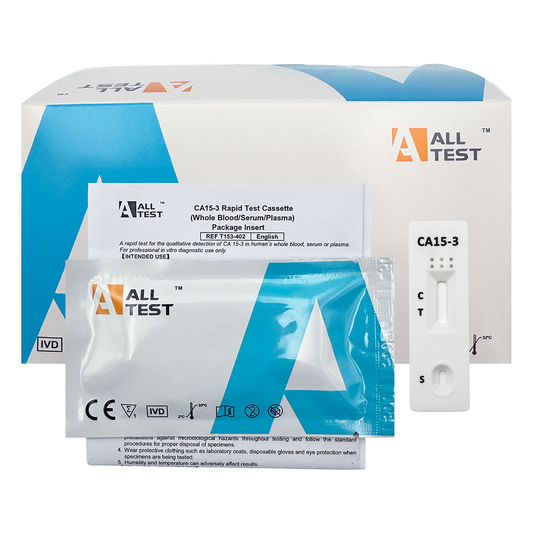
Breast Cancer Marker Testing (CA-15 Test Kits)
The NHS breast cancer pathway is centred on mammography, ultrasound, and biopsy, not blood-based tumour marker screening. Markers such as CA 15-3 and CEA may be used in some clinical contexts to monitor advanced or recurrent disease, but they are not used for routine detection or diagnosis.
Colon (colorectal) Cancer Marker Testing (CEA Test Kits)
Colon cancer is clinically grouped within colorectal cancer in NHS practice. The most relevant marker in commercial test contexts is again CEA, sometimes combined with other laboratory indicators. However, NHS diagnosis depends on endoscopic visualisation (colonoscopy), biopsy confirmation, and imaging (CT/MRI staging). Marker testing is therefore supportive rather than confirmatory, helping clinicians track disease progression rather than establish diagnosis.
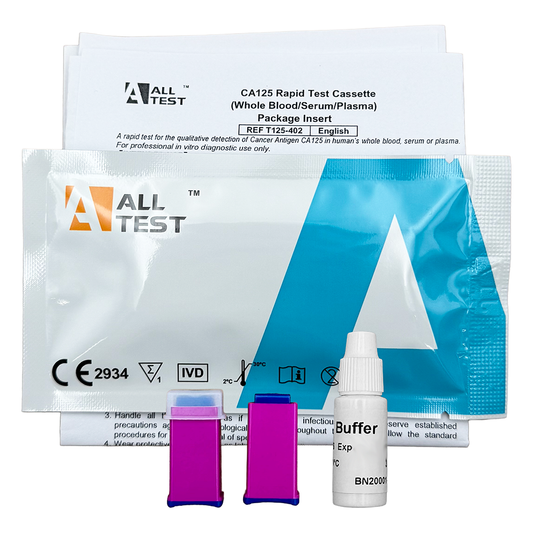
Ovarian Cancer Marker Testing (CA-125 Test Kits)
For ovarian cancer, the most widely used marker is CA-125, sometimes combined with imaging such as transvaginal ultrasound in NHS diagnostic pathways. However, CA-125 is not suitable as a general population screening test, because levels can rise due to non-cancerous conditions like endometriosis or fibroids. In clinical practice, it is mainly used to help assess symptoms, support diagnostic decision-making in higher-risk patients, and monitor treatment response once cancer has been identified.
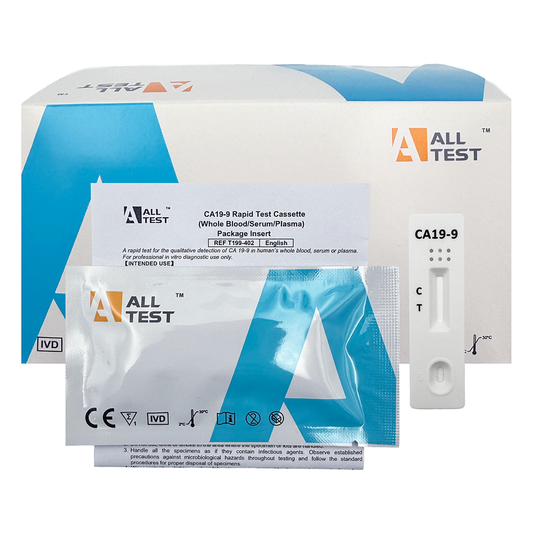
Pancreatic Cancer Marker Testing (CA19-9 Test Kits)
CA 19-9 is the most commonly used tumour marker associated with pancreatic cancer. In NHS and specialist oncology settings, it is primarily used to monitor disease progression and treatment response in patients with confirmed pancreatic cancer. It is not used as a standalone diagnostic or screening test because levels can also be elevated in benign pancreatic, liver, and biliary conditions. Diagnosis of pancreatic cancer typically relies on imaging such as CT or MRI and confirmation through biopsy.
Prostate Cancer Marker Testing (PSA Test Kits)
The primary blood test associated with prostate cancer is PSA (prostate-specific antigen). Within NHS practice, PSA testing is used as part of a risk-based diagnostic pathway, not as a definitive screening tool for all men. Elevated PSA levels can be caused by benign prostate enlargement, inflammation, or infection, so abnormal results are always followed by further assessment such as MRI and biopsy before diagnosis is confirmed.