


Author Dr Kate Garside
How to Test Yourself and Check Your Cholesterol at Home
High cholesterol is one of the most common health problems in the UK, and one of the easiest to miss. It rarely causes any symptoms, so most people only find out they have it from a blood test, or after something more serious has already happened. The British Heart Foundation estimates that close to half of UK adults have cholesterol above the recommended level, and most of them feel perfectly well.
The reassuring part is that you no longer have to wait for an appointment to find out where you stand. You can test yourself and check your cholesterol at home using a single drop of blood from your fingertip and a small digital cholesterol meter, with a result in around 30 seconds. In this guide I'll explain the different home test kits available, walk you through the test step by step, and help you make sense of your numbers, including when it's time to speak to your GP.
Quick guide: how to check your cholesterol at home
- Get a home cholesterol meter with matching cholesterol test strips and lancets.
- Wash your hands in warm, soapy water and dry them thoroughly.
- Insert a test strip and check the code on the screen matches your strips.
- Prick the side of your fingertip and let a good-sized drop of blood form without squeezing.
- Touch the drop to the strip and wait for your reading.
- Write down your result and compare it with the healthy level of below 5.0mmol/L.
Why it's worth knowing your cholesterol number
Cholesterol is a fatty substance made mostly by your liver. Your body needs some of it to build cells and make hormones, so cholesterol itself isn't the enemy. Problems start when there's too much of it circulating in your blood.
There are two main types. HDL, or "good" cholesterol, carries cholesterol back to the liver to be cleared away. Non-HDL, or "bad" cholesterol, which includes LDL, can slowly build up in the walls of your arteries, narrowing them and raising your risk of a heart attack or stroke.
Because there are no warning signs, a blood test is the only way to know your level. This matters for everyone, but especially for the estimated 1 in 250 people in the UK with familial hypercholesterolaemia, an inherited condition that causes very high cholesterol from birth. Many of them are slim, active and eat well, and have no idea anything is wrong.
The three ways to check your cholesterol at home
Not all home cholesterol tests work the same way. Here's how the main options compare, so you can choose the one that suits you.
| Test method | How it works | What it measures | Result in | Best for |
| Digital cholesterol meter | A finger-prick drop of blood goes onto a cholesterol test strip, which a reusable handheld meter reads | Total cholesterol. Multi-test meters can also check blood glucose and uric acid or haemoglobin | Around 30 seconds | Regular monitoring and tracking changes over time |
| Single-use test card | A drop of blood changes the colour of a card, which you compare against a printed chart | Total cholesterol, as a rough range | A few minutes | An occasional one-off check |
| Postal laboratory kit | You collect several drops of blood into a small tube and post it to a lab | A full lipid profile, including HDL, LDL and triglycerides | A few days | A detailed one-off baseline |
For most people who want to keep an eye on things, a digital meter is the most practical choice. Once you own one, each check costs only the price of a strip, the reading is far more precise than matching colours on a card, and you can repeat the test whenever you need to, which is exactly what you want if you're trying to bring your numbers down.
Doctor-approved home cholesterol meters
EasyLife Plus Total Home Cholesterol Testing Kit
A complete starter pack with 22 cholesterol tests, lancets and a lancing device. Uses a small blood sample and gives a result in around 30 seconds.
View Kit
EasyLife GCU PLUS Meter
Checks total cholesterol, blood glucose and uric acid with one meter. A sensible choice if you're also keeping an eye on blood sugar or gout.
View Meter
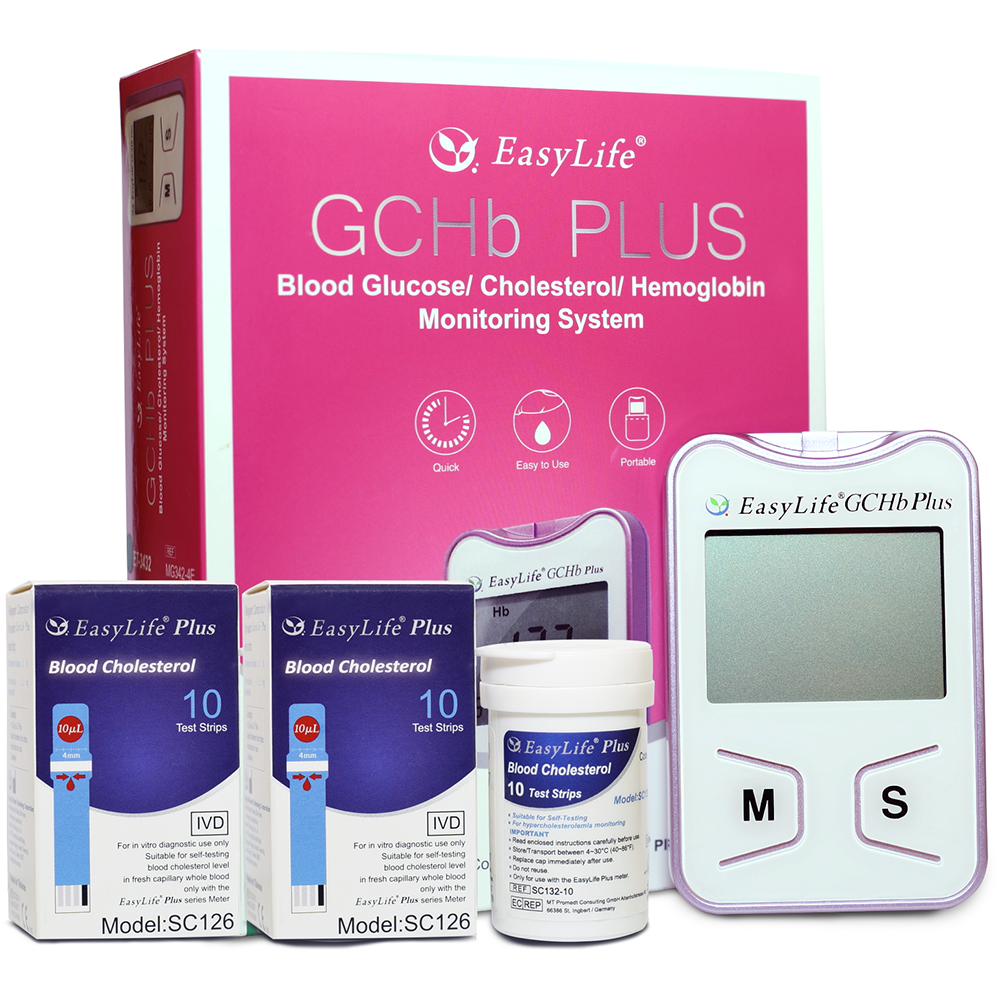
EasyLife GCHb PLUS Meter
Measures total cholesterol, blood glucose and haemoglobin, so you can check for signs of anaemia with the same device.
View MeterWhat you'll need before you start
Getting everything ready first makes the whole thing quicker and far less fiddly. You'll need:
- A home cholesterol meter, with batteries fitted and the date and time set.
- In-date cholesterol test strips, plus the code chip that came with that batch.
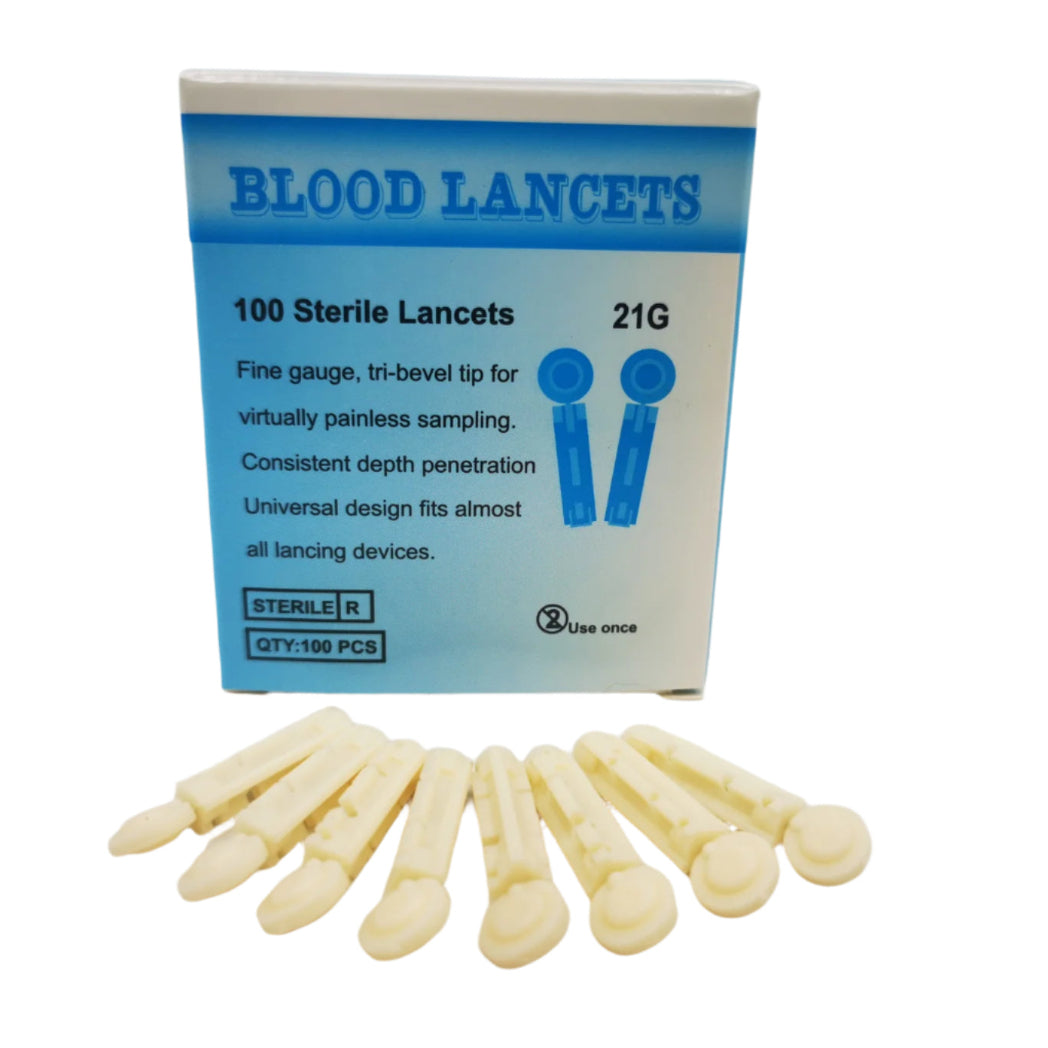
- Lancets and a lancing device. Most kits include these. If you struggle to get a big enough drop, a slightly thicker 21G lancet often helps.
- Warm water, soap and a clean towel.
- A clean tissue to press on your finger afterwards.
- A notebook or phone to log your results.
You can find spare lancets and lancing devices in our lancets collection.
How to test your cholesterol at home, step by step

If you've never pricked your own finger before, don't worry. Most people are surprised by how quick it is, and after a couple of goes it becomes second nature.
- Choose your moment. Sit down and relax for a few minutes first. If you plan to test regularly, try to test at roughly the same time of day each time so your readings are comparable.
- Wash your hands in warm, soapy water. The warmth brings blood to your fingertips, and soap removes traces of food or hand cream. Dry your hands completely, as water left on the skin can dilute the sample.
- Get the blood flowing. Let your arm hang down by your side and gently massage from the palm towards the fingertip for around 30 seconds.
- Prepare the lancing device with a fresh lancet, following the instructions in your kit.
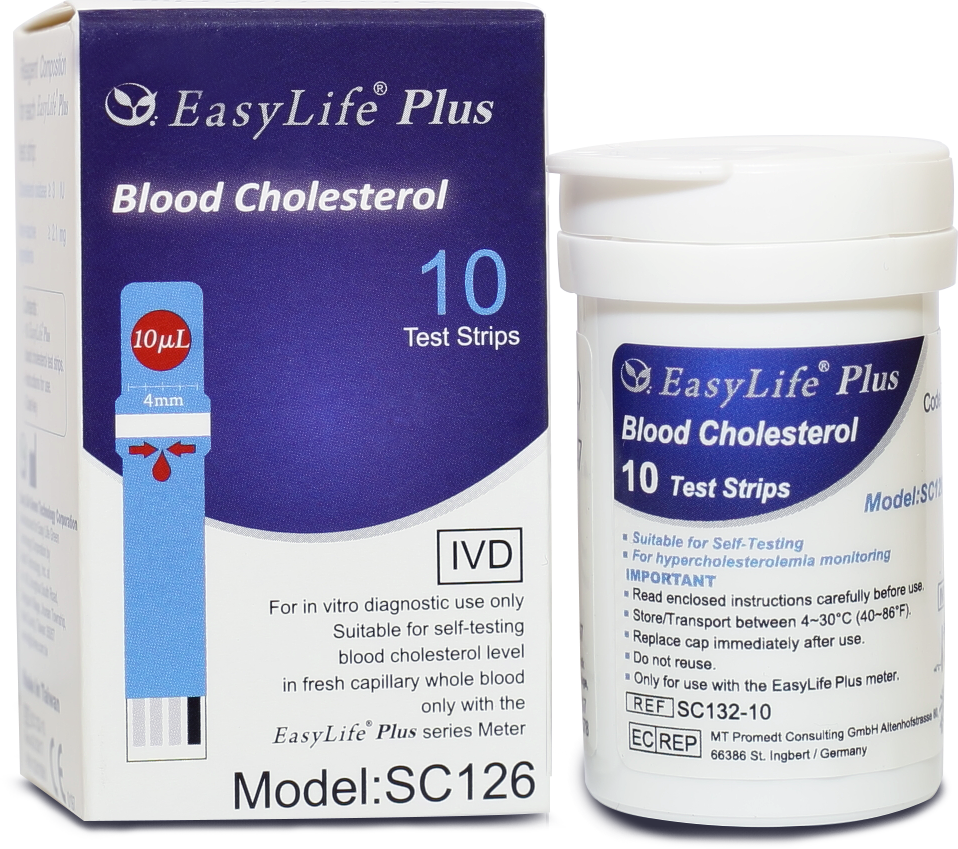
- Insert a cholesterol test strip into the meter. Check that the code on the screen matches your strips, then wait for the blood drop symbol to appear.
- Prick the side of your fingertip, ideally the middle or ring finger of your non-dominant hand. The side is less sensitive than the pad and usually bleeds more freely.
- Let a drop form naturally. Hold your hand below heart level and avoid squeezing the tip hard, as this pushes tissue fluid into the sample and can give a falsely low reading. If your kit's instructions say to use the second drop, wipe the first away with a clean tissue.
- Apply the blood to the strip. Touch the drop to the sample area and let the strip draw it in. Don't smear it on or top it up with a second drop.
- Read and record your result. On the EasyLife Plus meter this takes around 30 seconds. Note the date, time, reading, and whether you'd eaten beforehand.
- Dispose of the lancet safely in a sharps bin or a rigid lidded container, and press a clean tissue on your finger until it stops bleeding.

For more detail on technique, have a look at our guide on how to get a good finger-prick blood sample, or watch our EasyLife meter videos before your first test.
Do you need to fast before a home cholesterol test?
For most people, no. According to the NHS, it makes very little difference to your cholesterol levels whether you've eaten beforehand. Total cholesterol, which is what most home meters measure, barely moves after a meal.
Triglycerides are different, because they rise after eating. That's why a doctor checking a full lipid profile will sometimes ask you to fast for 10 to 14 hours first. Water is fine during a fast.
The most useful habit for home testing is consistency. If you test first thing before breakfast one week, do the same next time. Comparing like with like makes it much easier to spot a genuine change.
Understanding your cholesterol results
In the UK, cholesterol is measured in millimoles per litre (mmol/L). These are the general guide levels for healthy adults, based on NHS and British Heart Foundation guidance:
| Measurement | Healthy level for adults | How to test it |
| Total cholesterol | Below 5.0mmol/L | Home cholesterol meter |
| HDL (good) cholesterol | Above 1.0mmol/L for men, above 1.2mmol/L for women | Full lipid profile |
| Non-HDL (bad) cholesterol | Below 4.0mmol/L | Full lipid profile |
| LDL cholesterol | 3.0mmol/L or below | Full lipid profile |
| Triglycerides | 1.7mmol/L or below fasting, 2.3mmol/L or below non-fasting | Full lipid profile |
Home meters, including all of the EasyLife models, measure total cholesterol. The other measurements come from a full lipid profile, which is usually done by your GP surgery, a pharmacy or a laboratory.
Here's how I'd suggest interpreting a home total cholesterol reading:
| Your total cholesterol | What it may mean | What to do next |
| Below 5.0mmol/L | Within the healthy range | Keep up your healthy habits and recheck now and then |
| 5.0 to 6.1mmol/L | Borderline raised | Repeat the test on another day, look at your diet and activity, and mention it to your GP |
| 6.2 to 7.5mmol/L | High | Book a routine GP appointment for a full lipid profile and heart risk check |
| Above 7.5mmol/L | Very high | See your GP soon, especially if heart disease runs in your family, as this can point to an inherited cause |
Remember that one reading is never a diagnosis. Your GP looks at your cholesterol alongside your age, blood pressure, smoking status and other health conditions to work out your overall risk, often using a tool called QRISK. If you already have heart disease or diabetes, your personal target is likely to be lower than the general levels above.
How accurate are home cholesterol tests?
A good quality, CE-marked home cholesterol meter gives reliable results when it's used properly. In my experience, when people get readings that jump around, the cause is almost always technique rather than the meter.
The most common reasons for an unexpected result are:
- Squeezing the fingertip, which dilutes the blood with tissue fluid.
- Cold or damp hands, leading to a small or watery sample.
- Not enough blood on the strip.
- Expired or poorly stored strips, or a code chip that doesn't match the batch.
- Testing in a very hot or cold room.
- High-dose vitamin C supplements, which can interfere with the test chemistry.
- Certain medical conditions that affect the blood, such as raised bilirubin or the breakdown of red blood cells.
It's also worth knowing that cholesterol naturally varies a little from day to day, so small differences between readings are normal. Look at the trend over several weeks rather than fixating on a single number.
A useful tip: if you're having a blood test at your GP surgery, do a home test within a day or so of it. Comparing the two gives you a good feel for how your meter performs in your hands.
Total cholesterol or a full lipid profile: which do you need?
The two work well together rather than one replacing the other.
A home total cholesterol test is ideal for screening yourself, tracking whether lifestyle changes are working, and keeping an eye on things between GP reviews.
A full lipid profile is the better choice for your first proper assessment, if a home reading comes back raised, if heart disease runs in your family, or if you have diabetes or take cholesterol-lowering medicine. Your GP can arrange this, and many pharmacies and health screening clinics can do it on the spot from a finger-prick sample.
For pharmacies and clinics: the ALLTEST 5 in 1 cholesterol meter
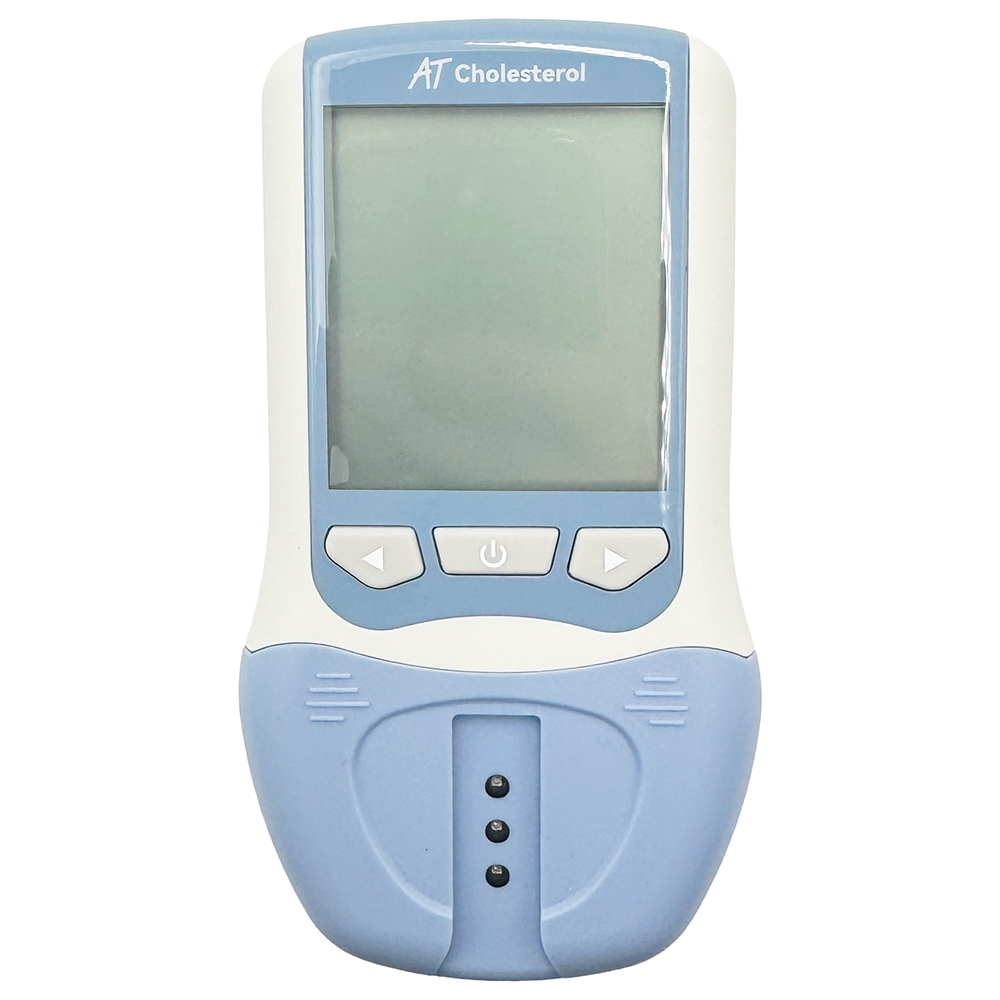
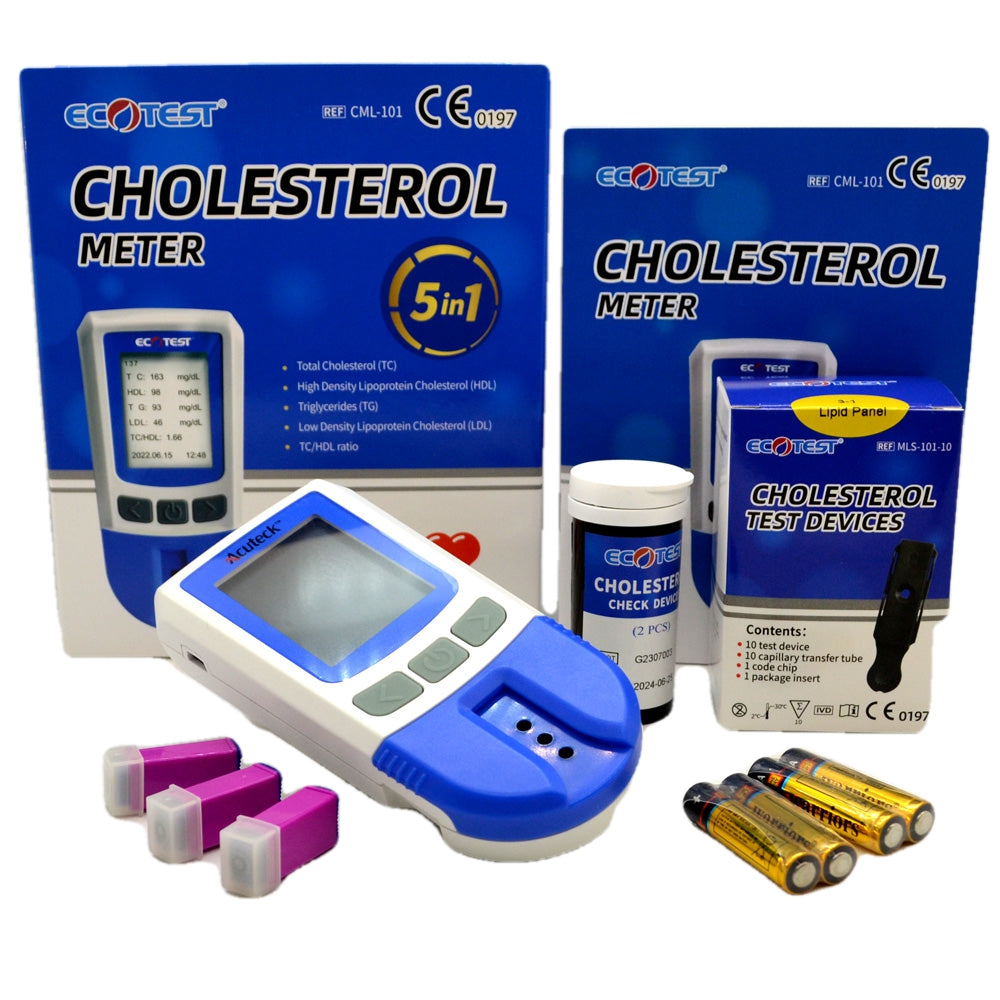
The ALLTEST Professional AT 5 in 1 Cholesterol Meter is the most comprehensive cholesterol meter we stock. From a single finger-prick sample, it measures total cholesterol, HDL and triglycerides. It then calculates LDL and the total cholesterol to HDL ratio, giving five results from every test in around two minutes.
It is CE certified for professional use, so it's designed for pharmacies, GP practices, occupational health teams and health screening clinics rather than self-testing at home. It uses a larger 35µL blood sample, transferred with a capillary pipette, and can also test venous blood, plasma and serum. A 500-result memory and an optional mains power and data transfer cable make it well suited to busy clinics running regular screening sessions.
If you'd like your own full lipid profile checked, ask your GP surgery or a local pharmacy that offers cholesterol testing. If you run a clinic or pharmacy, you'll find the meter and its refill test strips in our cholesterol meters collection.
How often should you check your cholesterol at home?
There's no single rule, but this is a sensible starting point:
- Healthy readings and no other risk factors: once or twice a year is plenty.
- Making changes to your diet or exercise: test before you start, then give it at least two to three months before testing again. Cholesterol takes time to respond.
- Taking cholesterol-lowering medicine: your GP will usually recheck your levels a few months after you start. Home checks in between can be reassuring, but never change your dose based on a home reading.
Testing every day isn't helpful. Natural ups and downs can cause needless worry without telling you anything new.
Who should consider checking their cholesterol?
Anyone can benefit from knowing their number, but it's especially worth checking if you:
- are over 40
- are overweight
- have a family history of high cholesterol, or a close relative who had a heart attack or stroke at a young age
- have high blood pressure or diabetes
- smoke, or are not very active
High cholesterol, high blood pressure and raised blood sugar often go hand in hand. If you're checking one, it makes sense to keep an eye on the others too. A home blood pressure monitor and a multi-test meter such as the EasyLife GCU PLUS, which also checks blood glucose, give you a much fuller picture of your heart health at home.
What to do if your reading is high
First of all, don't panic. A single raised reading is common and doesn't mean you're about to have a heart attack. Instead:
- Repeat the test on another day, paying close attention to technique.
- Book a GP appointment if your readings stay above 5.0mmol/L. Ask to be seen sooner if they're above 7.5mmol/L, or if heart disease runs in your family.
- Start with the simple changes that make a real difference.
The lifestyle changes with the most impact are:
- Cutting back on saturated fat, found in fatty meat, butter, hard cheese, cakes and pastries.
- Eating more fibre, such as oats, beans, lentils, wholegrains, fruit and vegetables.
- Being active for at least 150 minutes a week. Brisk walking counts.
- Stopping smoking, which lowers your good HDL cholesterol.
- Keeping alcohol within 14 units a week.
Give these changes two to three months, then retest. Seeing your number come down on your own meter can be a real motivator to keep going.
Frequently asked questions
Can you check your cholesterol at home without a meter?
Yes. Single-use test cards and postal laboratory kits don't need a meter. However, cards only give a rough range, and postal kits take a few days and cost more per test. If you want to check more than once, a digital meter is usually better value.
Does a home cholesterol test hurt?
It's a quick, sharp scratch that lasts a second. Pricking the side of your fingertip rather than the pad makes it noticeably more comfortable.
Can I use my blood glucose meter to check my cholesterol?
Only if it's a multi-function meter designed to take cholesterol strips, such as the EasyLife GCU PLUS or EasyLife GCHb PLUS. A standard glucose meter can't measure cholesterol.
What time of day is best for a home cholesterol test?
You can check total cholesterol at any time of day. For the most comparable results, pick one time and stick to it. First thing in the morning, before breakfast, works well for most people.
Can I check my cholesterol while pregnant?
It's best not to. Cholesterol naturally rises during pregnancy, so results won't reflect your usual level. Wait until a few months after your baby is born.
Can a home test replace my GP's cholesterol test?
No. Home testing is a great way to screen and monitor, but it doesn't replace a full lipid profile and heart risk assessment from your GP.
What is a good cholesterol level for my age?
The healthy levels are the same for all adults. What changes with age is your overall heart risk, which affects the personal target your GP may set for you.
Final thoughts
Checking your cholesterol at home is quick and simple, and once you've done it a couple of times it's no more fiddly than making a cup of tea. It turns an invisible risk into a number you can see, track and act on.
Use your home results to spot changes early, to see whether your efforts are paying off, and to have a better informed conversation with your GP. Knowing your number is one of the simplest things you can do to look after your heart.
Medical Disclaimer
The information in this article is for general educational purposes only and does not replace professional medical advice, diagnosis or treatment.
Home cholesterol meters are screening and monitoring tools. They cannot diagnose high cholesterol or measure a full lipid profile. Always discuss raised or unexpected readings with your GP, nurse or pharmacist, and never start, stop or change prescribed medication based on a home test result.
If you live in England, are aged 40 to 74 and don't already have a heart or circulatory condition, you're entitled to a free NHS Health Check every five years, which includes a cholesterol test. Some GP practices now offer the check online through the NHS App, with a free finger-prick blood kit posted to your home. Many pharmacies also offer cholesterol testing.
If you experience chest pain, sudden breathlessness, or signs of a stroke such as a drooping face, arm weakness or slurred speech, call 999 immediately.
Sources: NHS: Cholesterol levels, British Heart Foundation: Understanding your cholesterol levels, HEART UK: Understanding your cholesterol test results.