

 Discreet Packaging
 Doctor Certified
 Free Shipping Orders £50+


Valuemed Health Screening
Coeliac Professional Blood Test Kit (Gluten Intollerance)
Coeliac Professional Blood Test Kit (Gluten Intollerance)
Couldn't load pickup availability
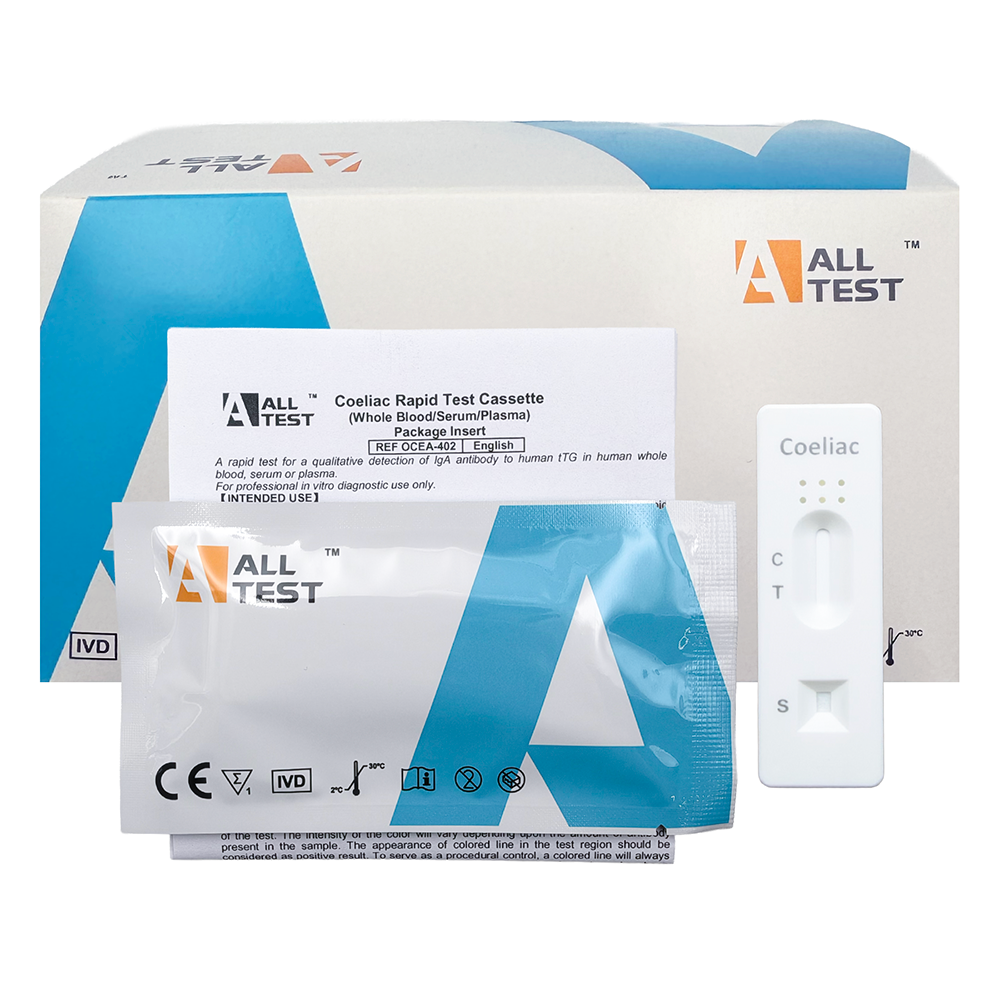
Coeliac Disease Rapid Test Cassette (tTG IgA)
Rapid Results. Reliable Screening Support. Professional Diagnostic Use.
The Coeliac Disease Rapid Test Cassette is a rapid immunochromatographic test designed for the qualitative detection of IgA antibodies to human tissue transglutaminase (tTG) in whole blood, serum or plasma.
Designed to support the assessment of suspected coeliac disease (also known as celiac disease), this rapid test detects tTG IgA antibodies associated with the body's immune response to gluten. It provides a convenient screening aid for healthcare professionals, with results available in just 10 minutes.
Coeliac disease is an autoimmune condition triggered by gluten consumption in genetically predisposed individuals. Early investigation can help identify people who may require further clinical assessment and diagnostic testing.
Why Choose the Celiac Blood Test?
- Rapid Results: Read results in just 10 minutes.
- Targeted Antibody Detection: Qualitative detection of IgA antibodies to human tissue transglutaminase (tTG).
- Multiple Specimen Types: Suitable for whole blood, serum and plasma samples.
- High Relative Specificity: 98.5% relative specificity reported in the manufacturer's performance evaluation.
- High Relative Sensitivity: 95.0% relative sensitivity reported in the manufacturer's performance evaluation.
- Simple Result Interpretation: Clear coloured test and control lines.
- Convenient Storage: Store at room temperature or refrigerated between 2–30°C.
- Single-Use Cassette: Individually packaged test cassette for professional diagnostic use.
Understanding Coeliac Disease
Coeliac disease is a chronic autoimmune condition in which consuming gluten triggers an immune response that damages the lining of the small intestine.
Gluten is a protein found in wheat, barley and rye. In people with coeliac disease, the immune system reacts to gluten and produces antibodies, including antibodies against tissue transglutaminase (tTG).
This immune response can damage the intestinal lining and interfere with the absorption of essential nutrients.
Common symptoms associated with coeliac disease include:
- Persistent bloating and abdominal discomfort.
- Diarrhoea or constipation.
- Excessive wind and digestive problems.
- Unexplained tiredness and fatigue.
- Iron deficiency anaemia.
- Unintentional weight loss.
- Mouth ulcers.
- Nutritional deficiencies.
Symptoms can vary considerably between individuals. Some people experience predominantly digestive symptoms, while others may have less obvious symptoms or no noticeable digestive problems.
The Coeliac Rapid Test Cassette detects IgA antibodies to tissue transglutaminase (tTG), helping healthcare professionals investigate a possible immune response associated with coeliac disease.
Coeliac Disease, Gluten Intolerance and Gluten Sensitivity: What's the Difference?
Coeliac disease and gluten intolerance are often confused, particularly by people experiencing digestive symptoms after eating gluten-containing foods. However, they are not the same condition.
Coeliac Disease
Coeliac disease is an autoimmune condition triggered by gluten. When someone with coeliac disease consumes gluten, their immune system reacts and can damage the lining of the small intestine.
The condition is investigated using coeliac-specific antibody testing, including IgA antibodies to tissue transglutaminase (tTG).
This is the antibody response that the Coeliac Rapid Test Cassette is designed to detect.
Gluten Intolerance and Non-Coeliac Gluten Sensitivity
Some people experience symptoms after eating gluten-containing foods without having coeliac disease.
This is sometimes described as gluten intolerance or non-coeliac gluten sensitivity. Symptoms can include bloating, abdominal pain, changes in bowel habits and fatigue.
Unlike coeliac disease, non-coeliac gluten sensitivity does not involve the same autoimmune response or characteristic intestinal damage.
The Coeliac Rapid Test Cassette is not designed to diagnose gluten intolerance, non-coeliac gluten sensitivity or food allergies. It specifically detects IgA antibodies to tissue transglutaminase as an aid in investigating coeliac disease.
Why Understanding the Difference Matters
People experiencing symptoms after consuming gluten should not automatically assume they have a gluten intolerance. Appropriate clinical assessment can help establish whether symptoms are associated with coeliac disease or another condition.
How Does the Coeliac Rapid Test Work?
The Coeliac Rapid Test Cassette uses immunochromatographic technology to detect IgA antibodies against human tissue transglutaminase (tTG).
When a specimen containing the relevant antibodies is added to the cassette, the antibodies interact with the tTG antigen conjugate. The resulting immune complex migrates along the test membrane, producing a coloured line in the test region.
The appearance of a coloured line in the test region indicates the presence of detectable tTG IgA antibodies.
The control line acts as an internal procedural control, confirming that sufficient specimen has been added and that the test has performed correctly.
How to Use the Coeliac Rapid Test
The test is intended for use by trained healthcare professionals. Always follow the supplied instructions for use.
- Allow the test cassette, specimen and buffer to reach room temperature (15–30°C).
- Remove the cassette from its sealed pouch and place it on a clean, level surface.
- Add the appropriate specimen volume to the specimen well:
- Serum or plasma: 1 drop (approximately 10 μL).
- Whole blood: 2 drops (approximately 20 μL).
- Add 2 drops of supplied buffer (approximately 80 μL).
- Start the timer and wait for the coloured lines to appear.
- Read the result at 10 minutes.
Important: Do not interpret results after 20 minutes.
Understanding the Test Results
Positive Result
Two coloured lines appear: one in the Control (C) region and one in the Test (T) region.
This indicates the presence of detectable tTG IgA antibodies in the specimen. Any visible colour in the test region should be considered positive, regardless of intensity.
Negative Result
One coloured line appears in the Control (C) region, with no visible line in the Test (T) region.
This indicates that tTG IgA antibodies were not detected above the test's detection limit.
A negative result does not completely exclude the possibility of coeliac disease.
Invalid Result
The Control (C) line does not appear.
The test is invalid and should be repeated using a new test cassette.
Clinical Performance
The manufacturer's performance evaluation compared the Coeliac Rapid Test Cassette with a leading commercial coeliac test using clinical specimens.
Reported performance:
| Performance measure | Result |
|---|---|
| Relative sensitivity | 95.0% |
| Relative specificity | 98.5% |
| Accuracy | 98.0% |
These figures represent the manufacturer's reported comparative performance and should not be interpreted as a guarantee of diagnostic accuracy in every clinical setting.
Important Information Before Coeliac Disease Testing
For accurate investigation of suspected coeliac disease, it is important that individuals continue consuming gluten before and during the diagnostic process.
Reducing or eliminating gluten before testing can affect antibody levels and may lead to inaccurate or false-negative results.
A positive result from this rapid test should be followed by appropriate clinical assessment and further diagnostic investigation. A negative result does not rule out coeliac disease, particularly where symptoms persist or clinical suspicion remains.
The test should not be used as the sole basis for diagnosing or excluding coeliac disease.
Frequently Asked Questions
Can this test detect coeliac disease?
The test detects IgA antibodies to tissue transglutaminase (tTG), which are associated with coeliac disease. It is intended as an aid in the diagnosis of coeliac disease and should be interpreted alongside clinical findings and other diagnostic investigations.
Does the test detect gluten intolerance?
No. The test specifically detects tTG IgA antibodies associated with coeliac disease. It cannot diagnose non-coeliac gluten sensitivity, general gluten intolerance or food allergies.
What is the difference between coeliac disease and celiac disease?
Coeliac disease and celiac disease refer to the same autoimmune condition. Coeliac is the standard British English spelling, while celiac is commonly used in American English.
Can I take this test if I am already following a gluten-free diet?
Reducing or eliminating gluten can affect coeliac antibody levels and may result in a false-negative result. Individuals undergoing investigation should discuss their diet and testing requirements with a healthcare professional before testing.
Does a positive result mean I definitely have coeliac disease?
No. A positive result indicates the presence of detectable tTG IgA antibodies. Further clinical assessment and appropriate diagnostic investigations are required to establish a diagnosis.
Can a negative result rule out coeliac disease?
No. The manufacturer states that a negative result does not exclude coeliac disease. If symptoms persist, further investigation or alternative testing may be recommended by a healthcare professional.
Product Specifications
| Specification | Details |
|---|---|
| Product name | Celiac Rapid Test Cassette |
| Test type | Rapid chromatographic immunoassay |
| Target analyte | IgA antibodies to human tTG |
| Specimen types | Whole blood, serum or plasma |
| Result time | 10 minutes |
| Relative sensitivity | 95.0% |
| Relative specificity | 98.5% |
| Accuracy | 98.0% |
| Storage temperature | 2–30°C |
| Intended use | Professional in vitro diagnostic use only |
| Product reference | OCEA-402 |
Important Product Information: For professional in vitro diagnostic use only. Not intended for self-testing or home use. Read the complete instructions for use before performing the test. This product is an aid to the investigation of coeliac disease and is not a standalone diagnostic tool.